The Mirrorbox Journey
Media Pack
Information and media assets to support journalists, broadcasters and content creators covering The Mirrorbox Journey.
About the Project
The Mirrorbox Journey is part of I Would Be Here If I Could, a nationwide social art project connecting people through the shared love, memory and experience of place.
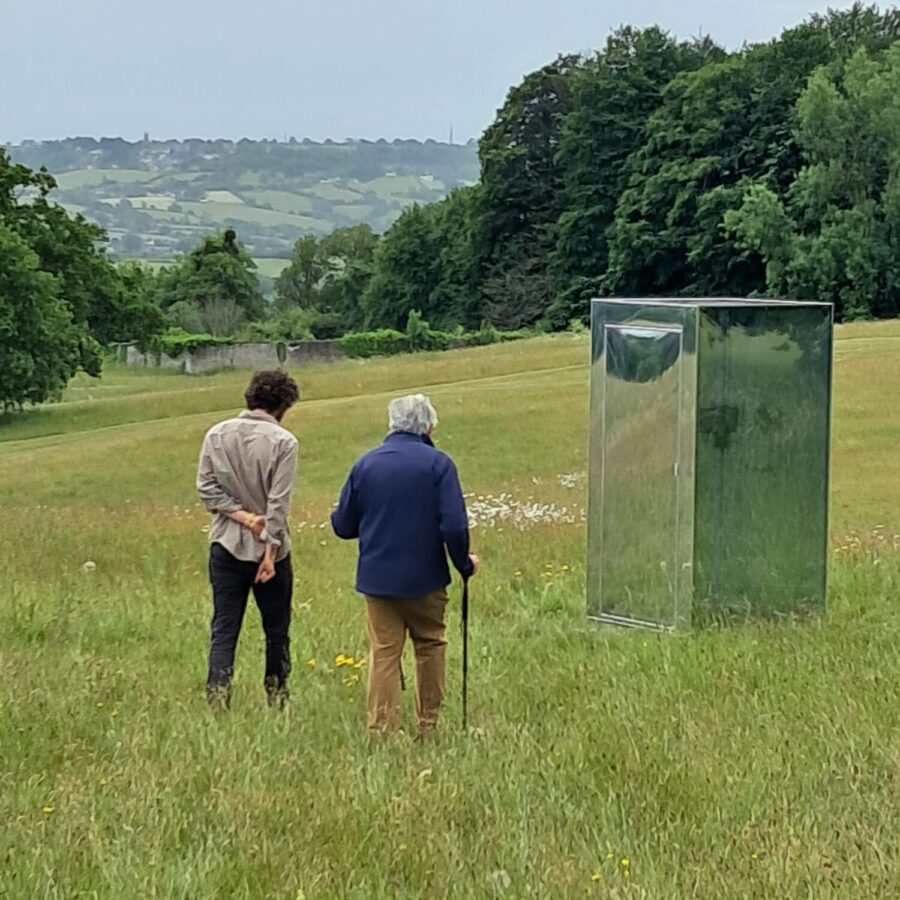
The Mirrorbox travels to places chosen by people living with ME and Long Covid that they love but can no longer reach, carrying a personal message from someone who is house- or bed-bound. Visitors are invited to step inside, disappearing from view as they listen and respond to messages.
By bringing these voices into the places from which people are absent, the project explores connection, memory and belonging, while making visible those excluded from public and cultural life.
Core Messages
1. The Journey
The Mirrorbox is travelling across the UK, carrying messages from people living with ME and Long Covid back to the places they love but can no longer get to.
Every location has been chosen by someone living with ME or Long Covid. Each stop becomes part of a growing nationwide artwork.
2. Making absence visible
The project makes visible the people who are missing from the places they love, creating greater understanding through lived experience.
3. Everyone can take part
You can take part in The Mirrorbox Journey wherever you are: listen to messages, send a digital postcard, follow the journey and share your own reflections.
4. Creating connection
The artwork shows how a shared love of place can connect people across distance through messages, memories and responses. Shared places become bridges between those absent and present.
Key Facts
- A travelling artwork visiting 7 UK locations — from the Royal Opera House and Tate Modern in London, to Robin Hood’s Bay and Bingley Five Rise Locks in Yorkshire.
- Each location is chosen by someone living with ME or Long Covid — each place is somewhere someone would be if they could.
- The Mirrorbox brings absent voices into public spaces — visitors can step inside, hear a personal message from someone who cannot be there, and respond with a digital postcard.
- Over 2 million people in the UK live with ME or Long Covid.1 Both are neurological conditions that leave many people housebound or bedbound for months, and often years, due to barriers including limited mobility, fluctuating energy, and sensory challenges.
- It can be experienced remotely — people who cannot travel can follow the journey online, listen to the messages, and send digital postcards from wherever they are.
Quotes
From Message Senders (participants with ME and Long Covid)
Knowing people were there, hearing my message made me feel connected – like I was with them. More importantly, it made me feel visible again.
Charlotte, message sender, Glastonbury Tor
Thank you for helping those of us who are confined by illness in some way, to feel a little more part of the wider world that we miss so much.
Katie, message sender
Due to my illness, I have been mostly housebound for well over a decade. The isolation and grief that comes from having to live separately from the rest of the world is vast and unimaginable unless you have experienced it for yourself.
Charlotte, message sender
I love this idea, making us visible in the spaces where we are missing ( and maybe these spaces are missing us too)
Kate, message sender
From Mirrorbox visitors
I love the way this project gives a voice to those who aren’t seen.
Mirrorbox visitor
The Mirrorbox project is a beautiful and moving piece of work. It creates a focal point for complex discussions about the disappearance of people with M.E. from society.
Dr Amble Ysgawen-Skuse – composer
This is a love letter between those we cannot see because they cannot be present and the wider world.
Kim Wilde MBE
The Mirrorbox Journey / Tour Overview
The Mirrorbox Journey 2026 builds on a pilot journey in 2025, which took the artwork to selected locations in Bristol and to the summit of Glastonbury Tor. During the pilot, hundreds of people encountered the Mirrorbox, with many responding to messages through postcards.
Tour locations and dates
- Royal Opera House, London — 12–13 September 2026
- Jubilee Square, Brighton — 17–18 October 2026
- Thornton Heath Leisure Centre, Croydon — 8–9 November 2026
- Tate Modern, London — 13–14 March 2027
- Whitby, North Yorkshire — 14–15 May 2027
- Robin Hood’s Bay, North Yorkshire — 16 May 2027
- Bingley Five Rise Locks, West Yorkshire — 12–13 June 2027
Press Materials
Story ideas and interview opportunities
The project opens conversations about illness, disability, absence and belonging. Story angles include:
- The people missing from public and cultural spaces — what absence can tell us about access and participation.
- A nationwide social artwork shaped by people who cannot physically travel with it.
- Place, memory and belonging — why particular places matter when we can no longer reach them.
- Art made from lived experience — 60% of the project team live with ME or Long Covid.
- Connection between absent and present — creating exchanges between people who may never meet.
Notes to editors
About ME and Long Covid
ME (myalgic encephalomyelitis) is a neurological condition affecting over 400,000 people in the UK. It can cause debilitating fatigue, pain, cognitive difficulties and post-exertional malaise (PEM) — a worsening of symptoms following even minor physical or mental exertion. For some people, ME is severely disabling and can mean being housebound or bedbound.
Long Covid is a term used to describe symptoms that continue or develop after an initial Covid-19 infection. It can involve more than 200 reported symptoms, including fatigue, cognitive difficulties, pain and other symptoms that overlap with ME. An estimated 2 million people in the UK were living with Long Covid symptoms in 2024.
There is evidence of an overlap between ME and Long Covid. A recent systematic review found that more than half of people with Long Covid met diagnostic criteria for ME, and research has identified some shared biological mechanisms. However, Long Covid does not currently have a single agreed diagnostic definition, and the two conditions are not the same. Not everyone with Long Covid has ME, and more research is needed to understand both conditions and their relationship.
For further information and sources, editors may wish to consult the links below.
How to talk about the project
ME has had and continues to have a contentious medical history, and the language used to describe the condition matters.
For all project communications, please use ME as the abbreviation for myalgic encephalomyelitis and don’t refer to ‘Chronic Fatigue’ or ‘Chronic Fatigue Syndrome’.
Please do not use terms such as “sufferers”. Instead, use “people living with ME or Long Covid” or “people with ME or Long Covid”. Language that defines people through suffering can feel reductive and alienating to chronically ill and disabled communities.
Don’t use ‘tired’ or ‘tiredness’ when discussing the impact of ME or Long Covid – this trivialises the condition and is very different to the debilitating fatigue people living with these conditions experience.
Lived experience and collaboration
Created and led by Alison Larkman, an artist living with life-altering ME, the project has been developed from lived experience. 60% of the team involved with the project live with ME or Long Covid.
People contributing messages are not simply participants or subjects. They help determine where the Mirrorbox travels and are collaborators and co-creators of the national artwork, carrying their voices beyond the physical boundaries imposed by illness.
A note on the messages
The messages often recall special experiences and places that may now be inaccessible to the sender. Some include potentially distressing themes, including grief and loss. Please approach and share them with sensitivity.
The Mirrorbox Journey is delivered by Invisible Visible CIC and has received project funding from Arts Council England. The project is endorsed by Action for ME, ME Association, Long Covid Support and Long Covid SOS.
Media Assets
- The Mirrorbox Journey trailer: Vimeo YouTube
- Project website
- The messages sent to the project
- The Mirrorbox Journey information
Social media channels, handles and tags
#MirrorboxJourney
@iwouldbehereificould
Suggested social post
The Mirrorbox is taking messages from people living with ME and Long Covid to the places they love but can no longer reach.
Its journey begins at the Royal Opera House, London from 12–13 September, before travelling to locations across the UK. Visitors can step inside the interactive Mirrobox sculpture, listen to messages, and write postcards back.
Participants become part of a growing national artwork, connecting people across distance and building a collective portrait of the places we love, the lives we lead, and what it means to be absent from them.
@iwouldbehereificould.com
Contacts
General enquiries
For any other general, non-press or media enquiries, please contact:
Beccy Lloyd:
[email protected]
Interview Requests
Many of the project’s contributors live with long-term chronic illness, including severe ME. We are committed to protecting their health, energy and privacy. Contributors cannot be contacted directly and are not available for media interviews.
For interview requests with members of the project team, please contact Alison Larkman [email protected]
Footnotes
- Long Covid: The Office for National Statistics 2024 reported that that 2 million people in England and Scotland were experiencing self-reported Long Covid. Myalgic encephalomyelitis: Samms et al. (2025), “Unequal access to diagnosis of myalgic encephalomyelitis in England.” published in BMC Public Health estimates a lifetime prevalence of approximately 404,000 people in the UK, ↩︎